Sunday, January 24, 2021

Pandemic Travel: Not!


Sixteen years ago, I took this aerial photograph in a flight from Little River airport, south to Point Arena then back north to Mendocino.  Since that time, much has happened.  And now there is a pandemic affecting our world, and confining many of us to our homes with limited ability to travel, except in our memories.  Usually, I travel with Liz throughout the year--to Hawaii, Costa Rica, Cruises through the Panama Canal or down the Eastern Canada/New England area during fall colors, as well as camping in Oregon, Washington, Idaho, Nevada, Utah, Colorado, and more. In 2020, the year started of well with a trip to New Zealand and Australia. 

Then the pandemic hit, just a few days after our return from the New Zealand trip, and by mid-March, Shelter-At-Home orders were enacted, then extended, then modified but still there, and now we await vaccinations.  Gone were spring camping in the desert and summer camping in National Parks, and fall trips up the coast.  Gone too were our brief trips to San Francisco or Disneyland or other nearby areas of California.  Like all Americans, my family just struggles to stay well or recover from Covid, and hope for few family and friend losses, and wishing the vaccines could be deployed faster for all.

Many of us have baked more bread than ever before in our lives (count me in that group as I have ordered my third 50-lb sack of bread flour), and resumed gardening with a vengeance (while fighting raiding bunnies and racoons in my case).  


The above Google Earth picture shows the place much as it is today.  A few more trees have been taken out and brush pushed back along the edges of the clearing than in this 2018 image as we address the new fire reality.  The greenhouse now has three new raised beds at waist height (yay!), and will soon be home to lettuces and other later winter vegetables.  All in all, life in a pandemic up here is much the same as before, just with interesting masks, and more careful behaviors with outside, socially distant small meals and catch-up conversations.  New tools are patio heaters, exterior hand wash stations, etc.  And of course, Zoom.  Zoom Family sessions, Zoom meetings, Zoom collaboration, Zooming, Zooming, Zooming...

I need new glasses.

Sunday, February 9, 2020

Sydney


After our cruise, Liz and I stayed for five days in Sydney.  We arrived early on the Noordam, and had disembarked and reached our hotel (Hyatt Regency at Darling Harbour) by 9:30 a.m.  Our room was not ready, so we checked our luggage, and began to explore the City.

Previously, we had stayed at The Rocks, one bay over from where we were currently.  The transit hub Circular Quay is located at the Rocks, and indeed that is where our Cruise ship docked to let us disembark.  We could have easily hopped a ferry, taken a train, used rail, and even bus from the Rocks, but we did not yet have familiarity with the Darling Harbour area, which has a dreadful elevated highway right through the wharfside area.  However, it also has pedestrian bridges that cross this elevated traffic, ways to walk from our hotel to the wonderful wharf boardwalk without being in traffic, and more.  We used this early time to explore, and also to visit the adjacent Sydney Aquarium.


The aquarium was interesting, and had several good displays, but the Monterey Aquarium is hard to be topped.  The wharfside area, where we lunched, is full of restaurants and shops, leads down to a ferry stop, and is not far from transit into other areas into the city.  We settled into our Hotel late Saturday afternoon, and planned to go to Manley by Ferry the next day.

Reaching Manley would find us walking up a few blocks to the Wynyard transit station hub.  Nancy had given us her Opal Cards, and we added funds to the cards, passed through the turnstiles, and caught a train to Circular Quay in The Rocks.  There, we used our Opal Cards (it was Sunday, and all day would only be $2.79 to ride) to hop the ferry to Manley, and set off.  Although it was early morning, it already was hot, and we were sweating.  I was glad that we would be on the water, and happy to sit in the open bow area where the breeze would hit us. The ferry takes under a half hour, and it is a beautiful passage across the harbours and inlets of the area to arrive at Manley.


Manley is on a peninsula and is a suburb of Sydney, known for its lovely and less crowded beach (in comparison to Bondi, which is long and lovely but very, very crowded).  We had left early because of the heat, and had wanted a breakfast out in a non-tourist area.  We stopped at the Belgrave Cartel, a small hole-in-the-wall that definitely was local.  Liz had a Jaffel and I had a design-your-own, but what came wasn't what I thought I had designed, but it was wonderful, even if it was the first egg dish I had ever to use a knife on to cut through the egg.

We finished breakfast, walked back to the ferry stop as we were on our way to Manley Head, a beautiful park area at the tip of the peninsula, and hopped a bus at this transit area to get there.   Manly Head is a historical area, holding significance to the First People of the area, the Gayamagal people. We explored the trails around the Head, and enjoyed the birds and unusual plants we saw along the way.  We also saw the remnants of military fortifications from World War II as this locale would be a prime place to watch for approaching enemies. It is such a serene place that it is hard to believe we are only across the harbour from Sydney’s central business district (CBD).  We just had time to have a quick milkshake (kind of a milk plus flavoring then whipped) before catching the bus back.


Returning from Manley to Circular Quay, we took a ferry back to Darling Harbour, missing our stop at Bangaloo because we were unsure if it was the best one (it was), and ending up at the Maritime Museum stop.  So that's where we went, and we were both so glad that we did--it is a wonderful museum. It was quite hot by the afternoon, and the coolness of the museum was a nice respite.  The film was about marine dinosaurs, and it was quite well done, plus exhibits on marine icthyosaurs,
plesiosaurs, and mausasaurs were great.  The museum's nautical history was also very enjoyable, and I would highly recommend this as a visitor's stop.  Regretfully, we skipped the outdoor ship explorations only because it was so hot and we felt the ships would be hotter still.  We still had to walk across the harbour pedestrian bridge (in full sunlight) and that was enough for me.  I have been getting 10,000-15,000 steps a day, which is manageable but not so nice in hot weather.

We still were learning to navigate the area, and found ourselves back at street level near the hotel, just passing this lovely sculpture.


On Monday, we wanted to stop at the Sydney Museum, and hopped a ferry to Circular Quay.  Today it was raining, changing the weather pattern, so we first hurried up from Circular Quay to the Custom House to look at the model of the city under glass on the floor.  It was neat to see where we were and what was around us.  From the Custom House, we walked up in the rain to the Museum.

The Sydney Museum had a wonderful film that we caught nearly at the beginning.  It was a long film, but was the first detailed history of the European arrival in Australia that we had seen.  It was a brutal beginning, and the legacy of that beginning survives to this day.  That film caused me to search out more information, and I have found this: https://www.sbs.com.au/firstaustralians/about  I plan to look at this series after I get back.  The museum is full of wonderful exhibits across three floors, and can easily be covered in a few hours.

On Monday afternoon, my friends Frank and Maureen Reichmuth were arriving from the Gold Coast, and we touched bases and met them for dinner, trying the Baia restaurant right on the wharf boardwalk.  It was great to re-connect, and reminisce.  Tomorrow, the four of us plan to use our opal cards and ferry from Bangaloo across to Circular Quay, then ferry to Toranga to the Zoo.

On Tuesday, we set out for Bangaloo along the wharf--Maureen had to find a place to purchase Opal Cards, and the hotel had been less than helpful with giving her the wrong information.  But they got them, and we rendezvoused at the wharf and ferry site.  The ride to Circular Quay is short, and we easily transferred to the Toranga ferry which brought us to the base of the hill, where a bus transferred us up to the top of the hill and the zoo entrance.


This was a great day--not only visiting with Frank and Maureen, but also seeing our first Australian wildlife: kangaroos, koalas, Tasmanian Devils, Platypuses, and so much more.  The kangaroos and emus were in an open area where we walked past them without any fences between us.  It was absolutely wonderful.


We left the zoo and traveled back to the CBD again via ferry, and planned dinner at a place where Frank and Maureen had eaten before, the Blue Fish.  It was a good open air place on the wharf, just across the pedestrian bridge then a very short walk up-harbour from the Maritime Museum to the Blue Fish Restaurant--wonderful fresh fish.  After dinner, we decided to meet the next day before Frank & Maureen flew out.  We wanted to go to the historical Queen Victoria Building in the morning as it is now a marketplace and where I might find the Australian opal I was hunting.

It is a fabulous building, completed in 1898 and filling an entire city block.  It has a large central dome, and lovely stained glass plus original 19th century architecture.  It also had Volle, a jewelry shop that featured Australian opals!


We had time for a quick visit to the Chinese Friendship Garden, which was one of my favorite places. Maureen knew it was nearby, but the construction on the wharf for the new "ribbon" building was hiding it, but she persevered, and we found it! I was really happy we did, because it is so tranquil, in the middle of the city, and beautiful.  Lots of Water Dragons, which I grew to love!  I almost touched one as my hand went on a rock as I was stepping down some rough stairs, and I accidentally placed it about six inches from a dragon, which wasn't the least concerned I was there.


We parted from Frank and Maureen back at the wharf, as they needed to head out to get ready for their flight.  It was too short of a visit, but sure good to see them.

We found our way back to the wharf and lunch nearby, then onward to the Wildlife Zoo there, where we had multiple wonderful encounters with native animals including koalas, wallabies, and more.  Finally, we headed back to the hotel for a rest-up before dinner, then tomorrow we would be flying out to return home.


The Tasman Sea


The Tasman Sea is in the South Pacific Ocean, and is about 1200x1700 miles located between New Zealand and Australia.  We crossed it over two days to the South Island of New Zealand when our cruise first started, and we crossed it again over two days returning to Sydney from the North Island.  It is often referred as the "the ditch" in both Australia and New Zealand, much in the same way that the Atlantic is referred to as the "the Pond."  At this time of year, it is known for great wind activity, and high seas with passengers and crew often seasick.  The cruise just before ours had experienced this, reported our Captain, but luckily for us we only had a brief glimpse of high seas for a few hours on the start of our cruise, and the sea as like a lake on the return voyage.  Lucky us.

The Tasman's sea mid-ocean ridge was formed over 55 million years ago when the supercontinent Gondwana broke up, forming Africa and other large land masses like Australia.  At the time of this breakup, New Zealand was mostly a submerged continent.  The mostly submerged New Zealand continent, Zealandia, still sits over two moving segments -- the Pacific and Australian Plates, which are colliding.  The land surface of present day New Zealand is being uplifted at the same time it is being wrenched apart, forming a complex geology.  The oldest rocks in New Zealand, uplifted from the sea floor, formed about 510 million years ago during the Cambrian period.  The most recent rocks are days old, formed by the active volcanoes in New Zealand that are part of the Pacific's Ring of Fire along with the Cascade Range of the Pacific Northwest.

The geologic isolation of New Zealand and Australia is what gave rise to their unique flora and fauna.  In New Zealand, no mammals existed prior to the advent of humans only 800 years ago, and the dominant life forms were birds.  In Australia, marsupials and other unusual animal life formed, while humans covered the continent by about 50,000 years ago, and lived throughout the diverse desert, coastal, tropical and mountainous geography and plant and animal life until colonized by European settlers. 

The New Zealand Maori arrived from the east only 800 years ago, it is believed, via South Pacific islands, and had much in common with those forebears.  Even the language has commonalities.  This picture shows the traditional Maori greeting (which Liz and I were lucky enough to participate in at a Maori settlement).

The Australian Aboriginal peoples migrated from the west, it is believed, via routes that have ties with Asia and Africa, but were separated from these forebears by over 50,000 years.  This vast time allowed humans to develop diverse language and cultures across the length and breadth of Australia.  The historical photo at left is of an Aboriginal First People.

These two continents are neighbors across the Tasman Sea but separated by both the distance across the Tasman Sea, as well as complex surrounding past geologic occurrences, and so were colonized very differently by both people, animals, and plants.

Monday, January 27, 2020

Auckland

Auckland is the largest city in New Zealand at 1.7 million people.  In fact, about one third of New Zealand’s entire population lives in Auckland.  It is a beautiful City, and is undergoing considerable construction, which the lovely Wikipedia picture above does not reveal.  Our cruise ship was docked just down from the sky tower (space needle cousin), and adjacent work on a pier had three huge cranes going as they placed new pilings.  Three cranes there alone, and our tour Guide today said over 100 large cranes are working in Auckland, making it the most densely used crane city currently, exceeding the next one (Seattle) which had 50 big cranes going simultaneously.  That’s a lot of building going on.

We are staying two days in Auckland, allowing us to explore museums, the sky tower, aquarium, and adjacent rainforests.

The waters around Auckland are dotted with islands, large and small, both inhabited and uninhabited except for protected wildlife, and the waters are full of vessels, mostly hundreds and hundreds of sailboats.  The America’s Cup will be held here in 2021.

Another cruise ship came in the morning of our second day in Auckland—the Viking Sun. She is a smaller ship, but lovely.

Day 1 saw us exploring an aquarium where both King and Gentoo penguins are housed in a snow field enclosure.  Up close they are pretty amazing birds.

We also enjoyed a quick trip through the wonderful war memorial museum, which actually seemed more like a smaller version of Te Papa, and our wonderful guide passed on tremendous amounts of information in our brief one hour tour. We still didn’t get to see the Gallipoli display (the second museum where we missed it). The Gallipoli battle was fought in WWI, and had a great loss of life on both sides.  Both New Zealand Soldiers and Australians fought side by side, and the battle (and others) is commemorated on Anzac Day by both countries.  The battle and the fallen soldiers are well remembered to this day.

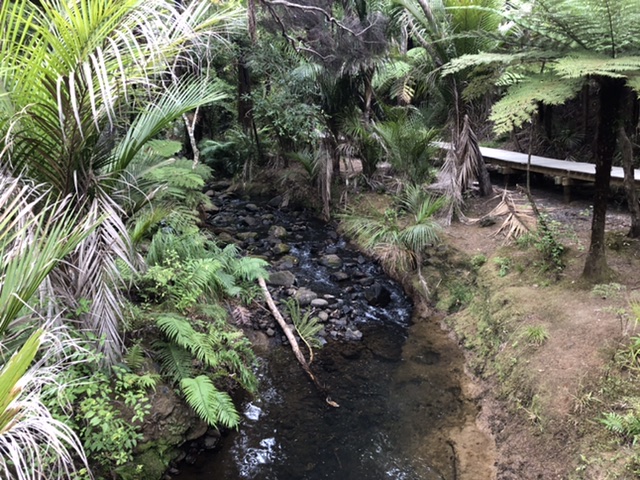
On Day two we were immersed in nature, traveling out of the city up the slopes of an ancient volcano to drive through dense Kauri tree forests to the Waitakere Regional Park.  We had to disinfect our shoes entering and leaving as the Kauri trees (which can be as ancient as our redwoods) are besieged by a phytophera pathogen which sounds very similar to sudden oak death.   There we walked along a stream in the rain forest.  The only wildlife we spotted was an eel in the creek and the native pidgeon, but it was a wonderful “bush tramp.”  The vegetation however was abundant and lovely.


At the visitor center, we were able to both look across at the park and down at the treetops below us.


We finished up our tour with a walk on a beach, and I dipped my toes in the Tasman Sea.


Saturday, January 25, 2020

Napier


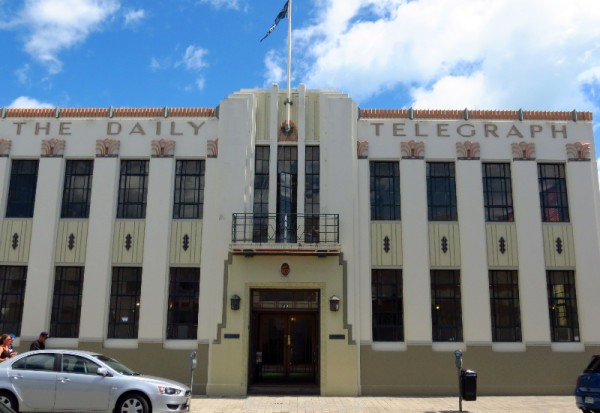
Napier is a lovely city, our first stop on the North Island of New Zealand.  It was virtually destroyed in the earthquake of 1931, and re-built in the style of the times: Art Deco, which is still beautifully retained today.


We also went inland into the agricultural countryside. Orchards for apples (mostly Gala), cherries, plums and more competed with new vineyards (and wineries), with sheep still important.  Our stop at a sheep farm, which has transitioned from wool as the mainstay to meat as the mainstay with wool as a minor part.  The farm also row crops and uses AG-tourism to support the income stream. They used to be solely wool, trying for fine wool from merino sheep, but the merino did not do well in the wetter area around Napier.  Still, they had a merino ram, shown below.


All sheep farms use dogs.  This farm used a border collie, a sheepdog, and a huntaway. The Huntaway is a large, strongly built breed of dog used for general sheep herding tasks.  They were bred in NZ to use their loud, deep bark to drive sheep.  Part lab,  border collie and Rottweiler, they use their voices as they circle around the flock.  But the best herder, to me, was the border collie.  

We ended up at an apiary and honey facility, where we could taste the different ho yes (all tasted different) including the costly manuka honey. We also were given some scrumptious ice cream.  Loved their bee entryway display (sorry it is sideways—will fix later):


Wellington Part 2


The next stop was at the marvelous Te Papa museum in Wellington.  Over six floors of exhibitions occupy the museum, varying from art, natural history, geology, culture, and military features.  Two hours permits just a small bite of this large apple, and it is magnificent.  Our driver was very proud of the museum and sorry we could see only a small portion. 

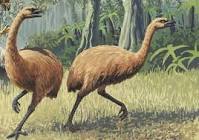
The natural history area again reminded us of the decline and loss of native wildlife with the advent of humans who brought other mammals with them which truly affected the unique ecosystem.  Skeletal extinct Moa were depicted over hung by the also now extinct  eagle which fed on them, emphasizing that the loss of one species is tied to so many more.


The Haast Eagle hunted only the nine Moa species, which was the dominant life form on these islands.  It went extinct in the 16th century, and the eagle as well.

Thursday, January 23, 2020

Wellington Part 1


We docked in the NZ capitol city, Wellington, this morning (Friday) and once again saw a large log deck in the port, this time with an adjacent barge ship transferring the logs (Pinus radiata or Monterey Pine, transplanted from California) to the barge hold that will carry the logs to Japan and other nearby Asian ports. Pinus radiata, a non-merchantable species generally in CA, grows straight and tall, and very quickly, in New Zealand.

Today we planned to explore the Zealandia eco-preserve as well as the famed Te Papa museum.  Zealandia is an interesting place, a non-profit founded to restore the preserve over the next 500 years to conditions similar to times prior to the arrival of humans 800 years ago.  They have encircled the entire preserve with a very expensive fine mesh steel fence of suitable height to exclude aLl mammals, as mammals did not exist here 800 years ago.  The land was a bird paradise, but humans brought pigs, sheep, cattle, goats, deer (many varieties), rats, dogs, possums, cats, and many other predators and grazers that killed native flightless birds and destroyed the habitat of many other native species.  The giant Moa bird is extinct, as are hundreds of other native creatures.  Zoolandia first excluded mammals, drained one of two man-made lakes that drowned habitat, and killed the enclosed mammals at the site, then began introducing native plants and animals.  Already the habitat is reverting and native birds and reptiles are thriving, like the following:

Rare, flightless bird Takahe, exists only in captive breeding programs.

Pateke or brown teal

Pied shag

Tuatara