Sunday, November 5, 2023

Cook Islands


 Following sea days when we enjoyed shipboard activities (watching great shipmates dance, for example, during the 5 o’clock dance hour shown in the last image here ) and leisure time to read and relax, we reached Cook Island and Aitutaki.  

It is a beautiful island with a difficult tender transport—using the Lee of the island plus the Lee of the ship we were able to access tenders for the difficult journey ashore through a lengthy 45’ wide channel where only one vessel at a time could cross.  Once there, we easily walked to a lovely lagoon area full of birds, shells, and beautiful scenery.


The next day was another Cook Island stop at Raratonga, but the captain felt it was unsafe to tender ashore and instead we are circumnavigating this lovely island paradise. This island view is shown at the top. 


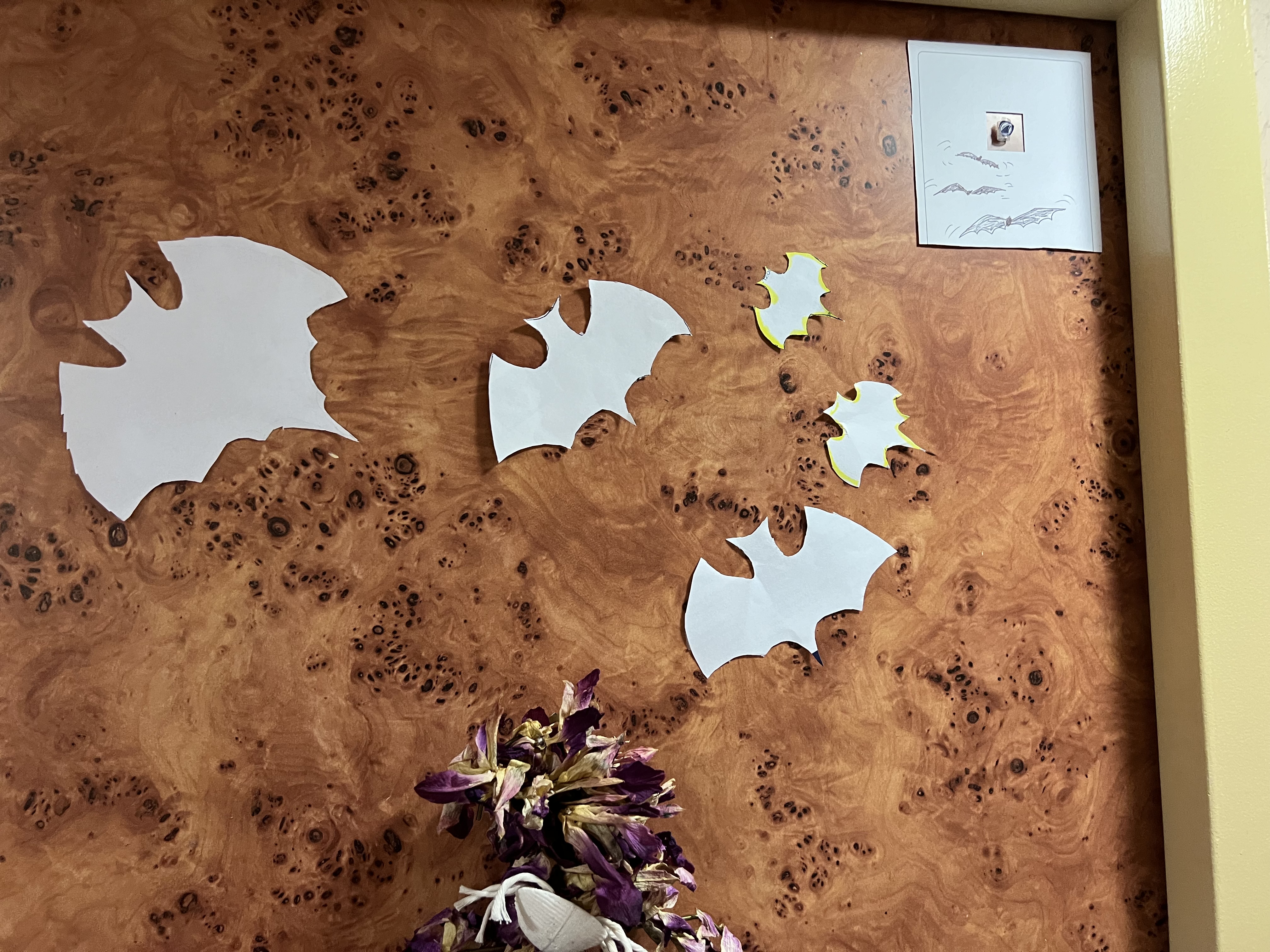
Halloween

 We decorated our door for Halloween and enjoyed the decor around the ship! 


Monday, October 30, 2023

NUKU'ALOFA, TONGATAPU, TONGA


We were warmly welcomed in Tonga with cultural dancers and music as we docked in the capital city of the Kingdom of Tonga. The island of Tongatapu is quite flat.  Very few areas appear more than 50 feet above sea level, and most are only a few feet. The Nuku’alofa dock is a very interesting pier that had obviously been destroyed in a disastrous storm or Tsunami, and had been rebuilt in the last decade — while the depth can handle ships, the pier is quite short with both the ship bow and stern extending past the pier length, and small support boats had to “ferry” bow and stern mooring lines to concrete islands for the more lengthy tie-up moorings.  It was quite complex maneuvering on arrival.

We had a lovely view of the Tongan Palace where we were docked:

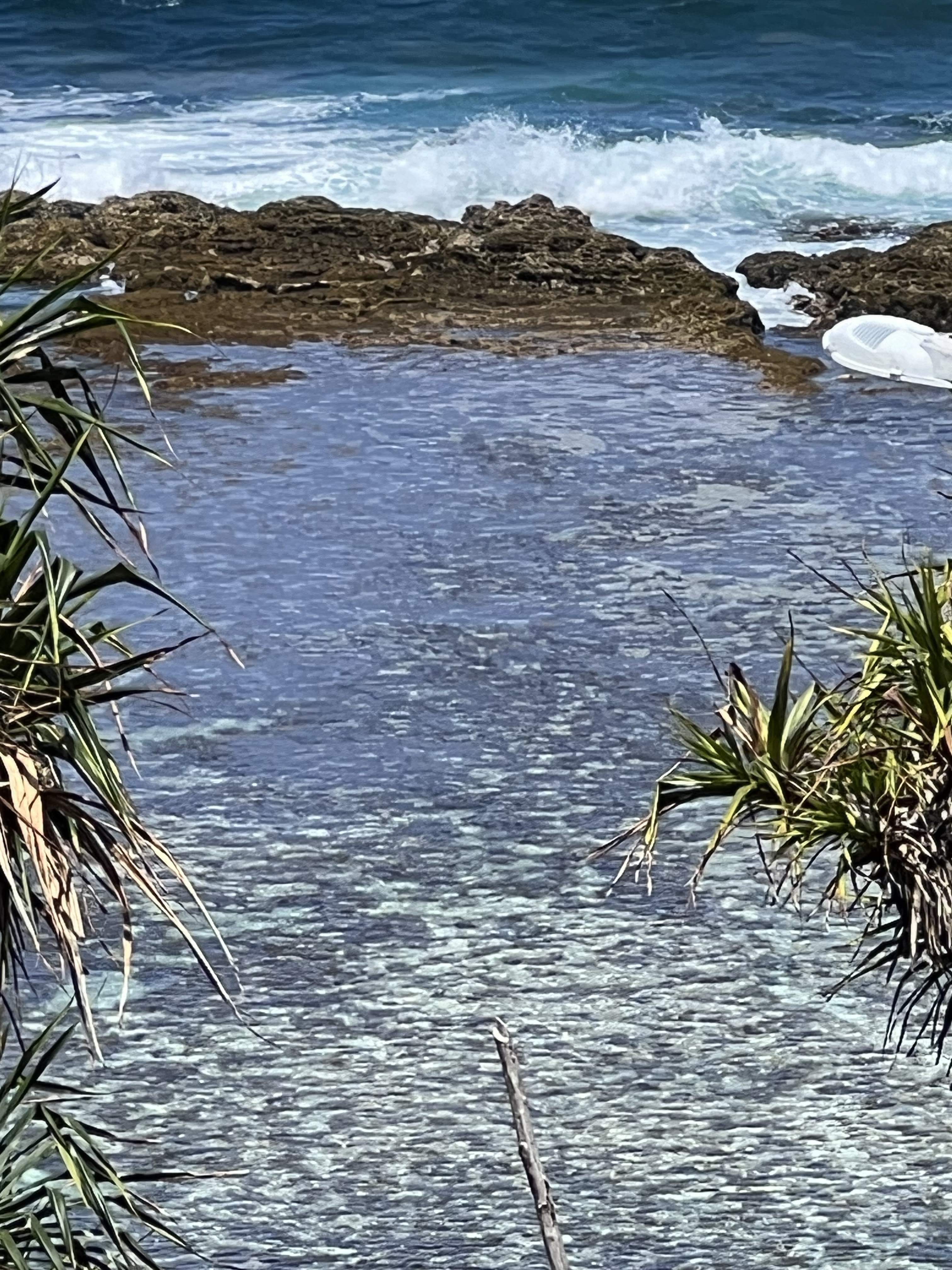
Our excursion across the island involved a stop at a major volcanic sea-level plateau with fissures where tidal action created a string of huge blowholes like an aerial white water curtain that moves from one end of the plateau to the farthest end with each suitable wave. Just a fraction of the curtain can be seen in the image below. 


 Later, we visited Hino Cave resort where we were served a traditional feast of local foods and presented with a show of cultural dancing.  The cave itself was partially filled in with sand from the Tsunami which is where the feast used to be held, but at our stop we ate in a well ventilated structure located topside above the cave.  The view from the structure’s deck is shown below.


Back at the ship, we were greeted on return by cultural dancers who danced for nearly 2 hours as we prepared to sail away and leave the beautiful port.


Friday, October 27, 2023

Final Fiji


Our next day in the Fijian Islands was also on Vito Levi island but on the opposite site from Suva, the capital. The bus ride to the park was enjoyable and fun but long (2 hours one way) and our tour guide, whose long name began with the Fijian sound for “Joe” so he requested we call him that, gave us a running commentary on sites we were passing plus taught us bits of Fijian language: Vinaka (thank you), Bula (hello/welcome), io (yes) and many more.  In the above picture Joe is wearing traditional Fijian attire of a skirt below his knees. He gave us permission to take his photograph as he held up a sperm whale tooth necklace hung from braided coconut fiber.  


 This stop included an excursion to an Eco Park where endangered species are captive bred, including the Fijian Crested Iguana—about 24inches in length, and taking 5 years to reach maturity for breeding. This beautiful reptile and several native birds were part of the park’s species recovery work. 

More images from the eco park including an endangered parrot and my first ever in-person glimpse of the flying fox—a fruit eating fox-shaped  and furry bat that I just enjoy watching from bat world sanctuary but had never seen in person until this excursion.  It was very cute.


We were traveling to the sugar cane producing side of the island, principally owned and operated by people of Indian descent.  We passed a beautiful temple, one of the largest on the island, in Nadi. 


We made it back to our ship just in time because the 5.5 hour excursion turned out to be 7 hours. But it was booked through Holland America so the ship could not leave without us.  We were not the last bus to return, either, as several later returnees were apparently running on Fijian time.

Our next day was a stop at the beautiful garden island of 
Vanua Levi, Fiji. The total island population is less than 8,000, and we were tendered ashore. After a thankfully short (packed minibus) drive to Flora Tropica gardens, we climbed up what had to be 150 wooden steps on a plank way path (dry rot made that a bit scary) to this beautiful over look before heading back to the town where we tendered back to ship and just relaxed after the hot steep climb.


Monday, October 23, 2023

Fiji—Suva


A Fijian marching band warmly welcomed us to the Suva port at 7:30 am on October 23.  Their music was wonderful, lasted about 30 minutes while docking and port papers were completed.  I am still not feeling up to the excursion we had booked—caught a cold—but Liz left on her Eco-Park tour, and I stayed aboard to rest and catch a telephone call with Oona.

This a busy port, with lots of vessels of all types entering a very narrow passage through coral reefs and rocky shoals.  While Liz was  off-ship, the Volendam had a man overboard drill, where a tender was lowered and scurried over to pick up an overboard life preserver. This image was taken from the poolside of the Lido where I watched the drill.


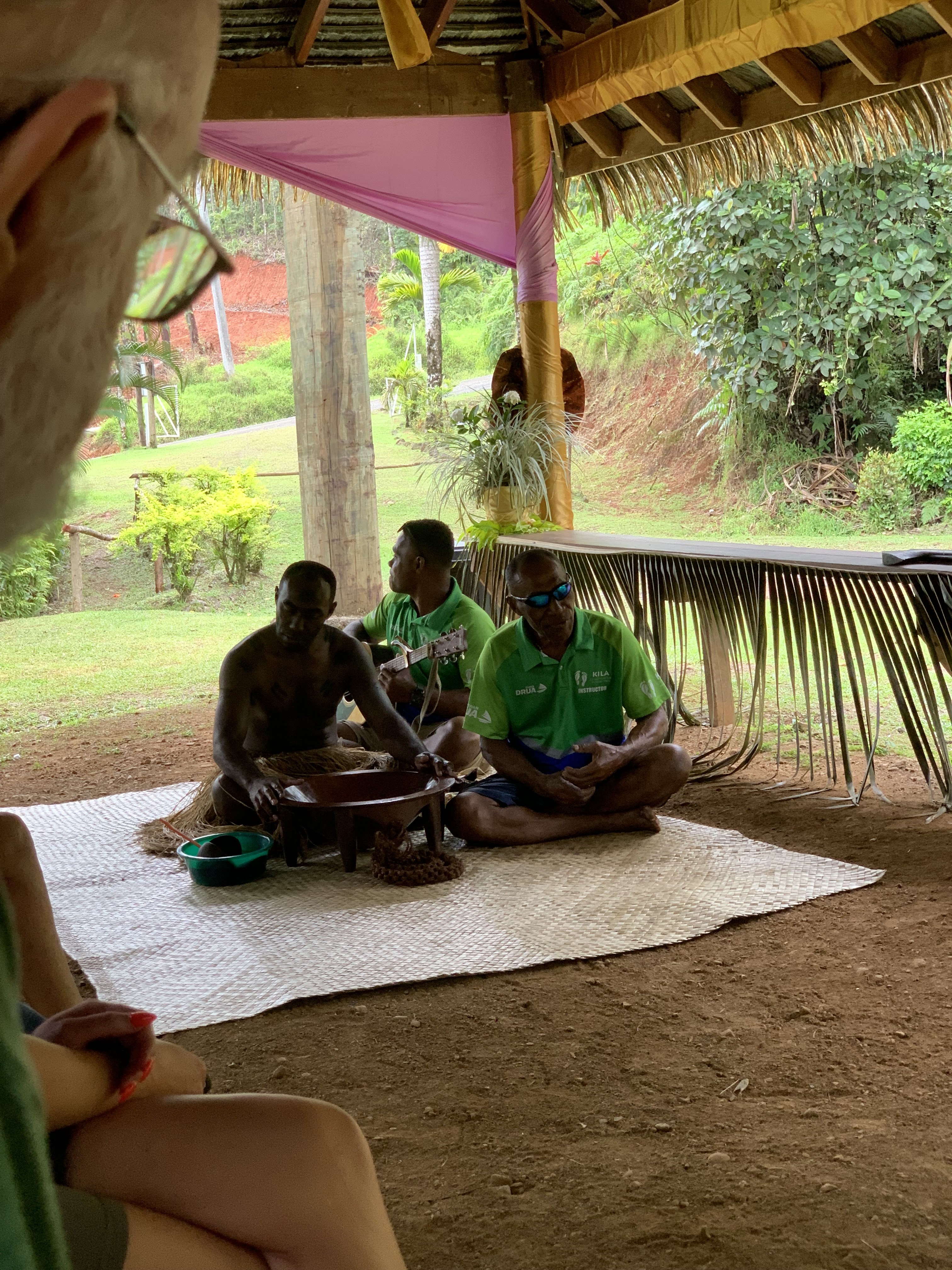
Liz returned from her adventure and said it was good I didn’t go as it was muddy, slippery, uneven ground with at least 60 primitive steps, and two steep ups-and-downs, but very beautiful.  From the lovely rainforest plants to the Fijian kava ceremony, she enjoyed every minute (but had to scrub her tennis shoes and wash her slacks afterwards):


Saturday, October 21, 2023

American Samoa


We moored in American Samoa on Friday morning and since we had an excursion, we went ashore right away and found our bus, which was an old wooden open air (open because all windows were open) bus trimmed on the outside with live ginger leaves and blossoms. The size of the closed in cab was tight, but the driver managed to put in a collapsible wheel chair for another guest. I’m guessing this vintage bus was of WWII era.  No loudspeakers so our lovely young Samoan woman in traditional dress had to project her voice.  We could hear as we wee in the second row—others behind us were likely not so lucky. 


We stopped at a tsunami memorial and saw this lovely protected beach and swim lagoon—but we couldn’t stop to swim. 


The vegetation around the memorial included a huge tall tree-like white gardenia—smelled so lovely, and the leaves and blossoms were absolutely  huge.


Lots of dogs wander the island—they look well fed but do not belong to anyone and just mingle with the population.


Tuesday, October 17, 2023

Crossing the Equator


 Crossing the equator is a big thing—shipmates turn from pollywogs (never before sailed over the equator) to golden shellbacks once they have journeyed over the equatorial line, which the Volendam did today. No one is really sure when or how the Line Crossing Ceremony, or Order of Neptune, came about. The ritual dates back at least 4 centuries in Western seafaring past. The ceremony observes a mariner’s transformation from slimy Pollywog (slime today looked like thin sugary frosting in todays ceremony) where the pollywogs first are ordered by King Neptune to kiss a fish (yes, a large real fish) then walked to where they get creamed with this wet sticky stuff, then be judged (by the Captain and his first line officers) whether he should advance—those who fail to kiss the fish or have transgressions are likely ordered overboard (must jump fully clothed and sticky into the pool), while those who pass the procedure are advanced to shellback.   For our ship’s crew, Neptune pardoned them all in the end so every crewman advanced and became shellbacks.

Historically, a seaman who hasn’t crossed the equator to become a trusty Shellback and be called a Son or Daughter of Neptune would be tested for their seaworthiness in this process.


Fortunately, for passengers, Liz and I just got our certificates without being smeared or dunked.